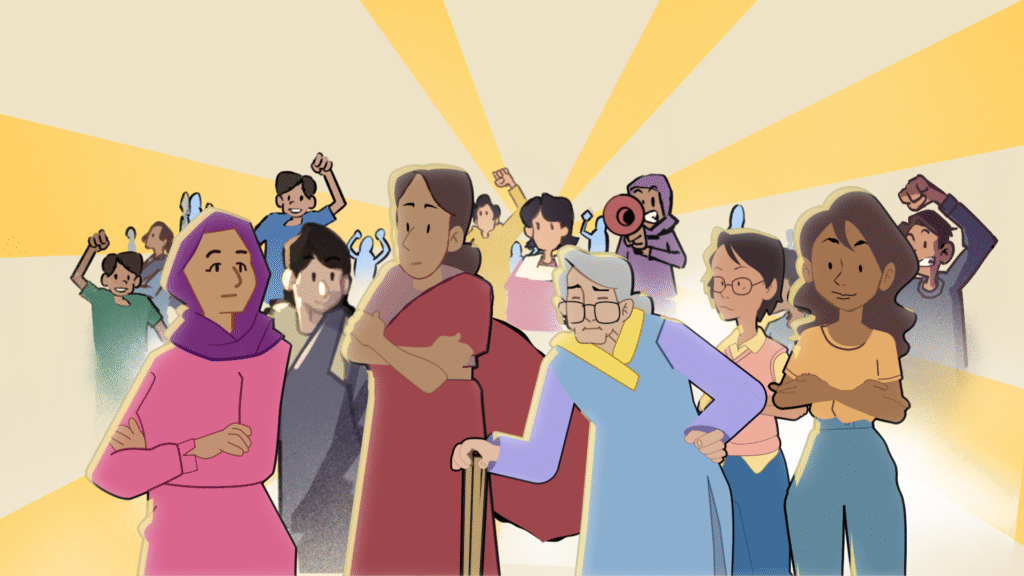
I’ve had the privilege of leading the Sustaining Power (SuPWR) project that examines when, how, and why women’s power struggles in Bangladesh, India, Nepal and Pakistan succeed in retaining power and sustaining their gains against backlash. As it draws to a close after six remarkable years, it may surprise you that the metaphor that best captures how I’m feeling comes from a Pixar film – Inside Out.
The film foregrounds a gamut of human emotions, all personified as animated characters who live inside the main character’s head. Relief was never characterised by Inside Out, yet that emotion, alongside, surprisingly, sadness, is what, for me, are now dominating my brain’s command centre, as SuPWR draws to a close.
SuPWR beginnings
‘SuPWR’ is an abbreviation from ‘Sustaining Power’, but our project team often colloquially referred to it as ‘SUPER’ and attached this nickname to many ideas: super women, super activists and super workshops being the most used.
As a trio of super colleagues with expertise and partners in Bangladesh, India, Nepal and Pakistan, over the past decade myself, Sohela Nazneen and Shandana Khan Mohmand had many conversations in equal measure marvelling at and being dismayed at the similarities in patriarchy and backlash across these countries. In the ever-present contexts of incessant, virulent and harsh backlash against women’s rights, we wanted to discover the positive deviation – why, where, when and how were women’s collectives able to retain, gain and sustain their hard-won successes. So, we submitted a concept note to the ESRC large grants portfolio in October 2018, and the SuPWR project launched in January 2020.
Sharing experiences: backlash, strategies and participatory methodologies
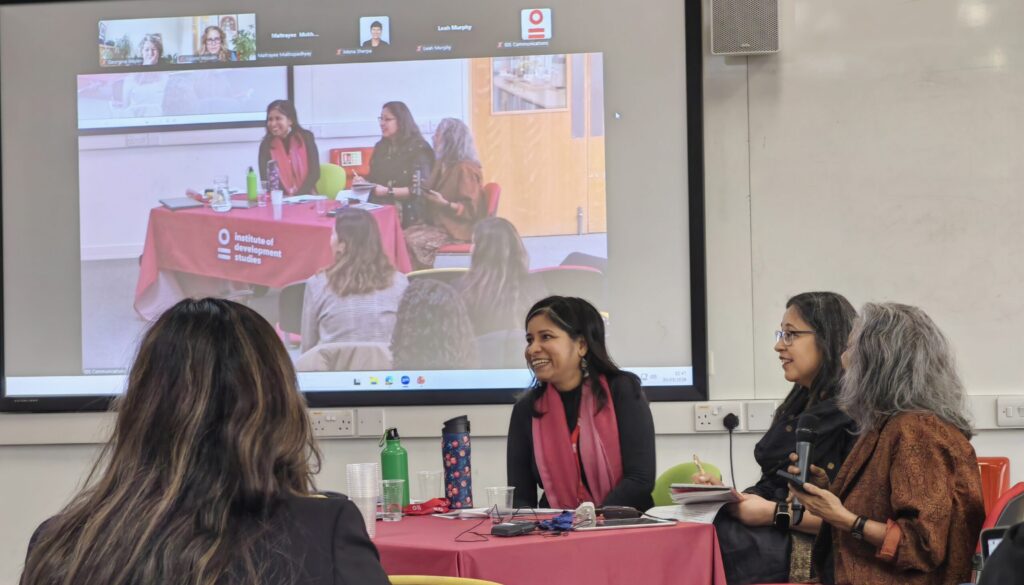
Fast forward six years and we gathered for a series of online and in-person events to share reflections and learnings from the SuPWR project.
In our first session – ‘Contested terrains: Rights and resistance amid backlash’ – activists from some of the 16 women’s movements that SuPWR collaborated with shared the backlash they face, the strategies that they had adopted, and the connections and learnings that SuPWR had enabled them to have. Awe and gratitude have been emotions I have felt and expressed every time I have listened to these inspiring super women, and this session was no different. Despite the pain, frustration and exhaustion, they continue their work at the frontlines of backlash, propelled by their anger, their joy, and their conviction for a better, more equal world.
Later the same day, we held a participatory workshop on ‘Theatre as a method of Research’, facilitated by Effie Makepeace (unfortunately, co-facilitator akshay kahana was unable to join due to not getting their visa). A key part of the SuPWR research process and project, Effie and akshay helped design and facilitate reflective workshops with each of the 16 women’s struggles that captured the ephemeral, the affective and the relational aspects of these struggles. This was an integral part of a process of accompaniment with the struggles, which also involved collecting and analysing qualitative longitudinal data with them through quarterly interviews, life histories and contact recorded by our research team in reflexive diaries.
During the workshop, as we went through some of the games and activities that we had used, the discussion and questions from IDS students and other participants took me back to the many moments of despair, joy, anxiety, fear and jubilation that we had surfaced and experienced with the super activists in these reflective workshops. The most joyful, yet intense, of these was the ‘mega-workshop’, which brought representatives from all 16 struggles together in Nepal for three days. This was a space where connections were made, alliances built and solidarities expressed.
SuPWR findings and reflections
As I prepped to bring our learnings from the past six years into a presentation for the first session on day two – ‘Feminist strategies at the frontlines of backlash in South Asia: Evidence from the SuPWR project’, a mixture of admiration and anxiety took hold of me. Admiration for my colleagues Priya Raghavan and Samreen Mushtaq – both incredible feminists and writers who, during the course of the project graduated from SuPWR post docs to Research Fellows – were now sharing the findings by my side in an opening presentation. Anxious because, while they both had a script that they would talk to, I had scribbled some talking points. But my anxiety subsided as soon as the session started and soon we were having paired conversations with each of our four super country leads, fondly nicknamed the 4Ms – Maryam Khan (Pakistan), Mona Sherpa (Nepal), Mubashira Zaidi (India), and Maheen Sultan (Bangladesh).
As the conversation progressed, and even as we acknowledged and surfaced the differences in context, we were seeing a South Asian story emerging – of backlash and of counterstrategies. Most salient of these was the importance of attending to the intimate, relational registers in theorising backlash – as had been embodied by our activists’ accounts. We also admitted the regenerative potential of backlash to galvanise and sustain collective action, albeit also recognising the immense pain and cost that activists bear because of this backlash. We shared how historic encounters with violence, as well as the anticipation of backlash, fundamentally shape activists’ imaginations, lives and choices – thereby having material, non-material and affective consequences.
A critical finding was that home for these activists was often not a refuge, as anti-gender backlash, unlike other forms of retrogressive politics, permeates every realm and register of activists’ intimate and public lives. Activists told us time and again about how backlash from within – whether from family, other women’s movements, or other sites of close affective/physical proximity to activists’ work and life – are experienced as particularly damaging.
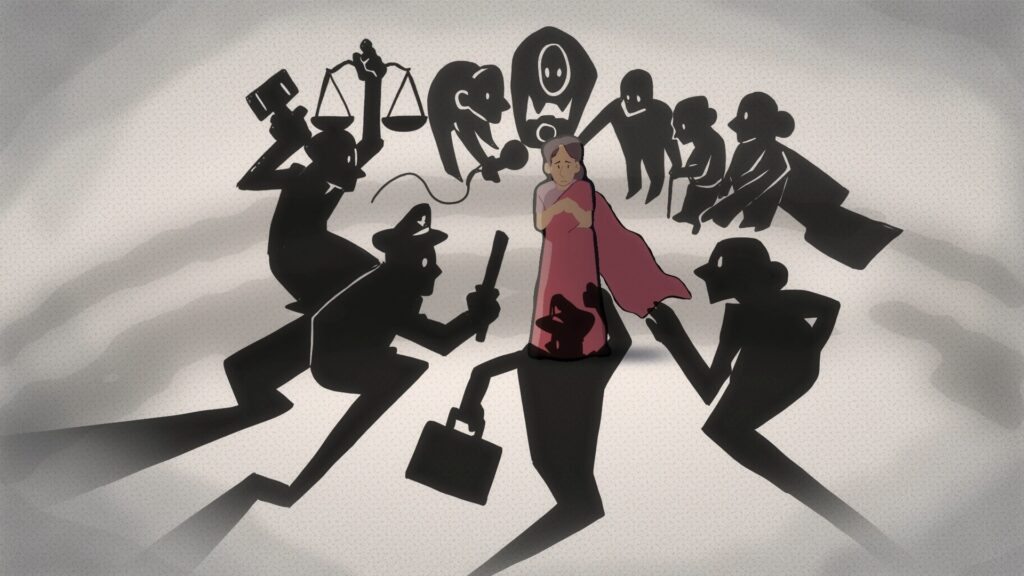
But as we spoke about strategies of resistance, about resilience, about fortitude and about care, the mood in the dissemination event shifted – as does the story line of our SuPWR animation (led by Leah Murphy, a super communications officer who has been pivotal to our external communications). We shared how flexible and adaptable strategies, tailored to specific contexts and types of backlash, was key to effective countering of backlash. We shared examples of strategic invisibility, of selective collaborations and of pragmatic choices that the struggles were continuously making.
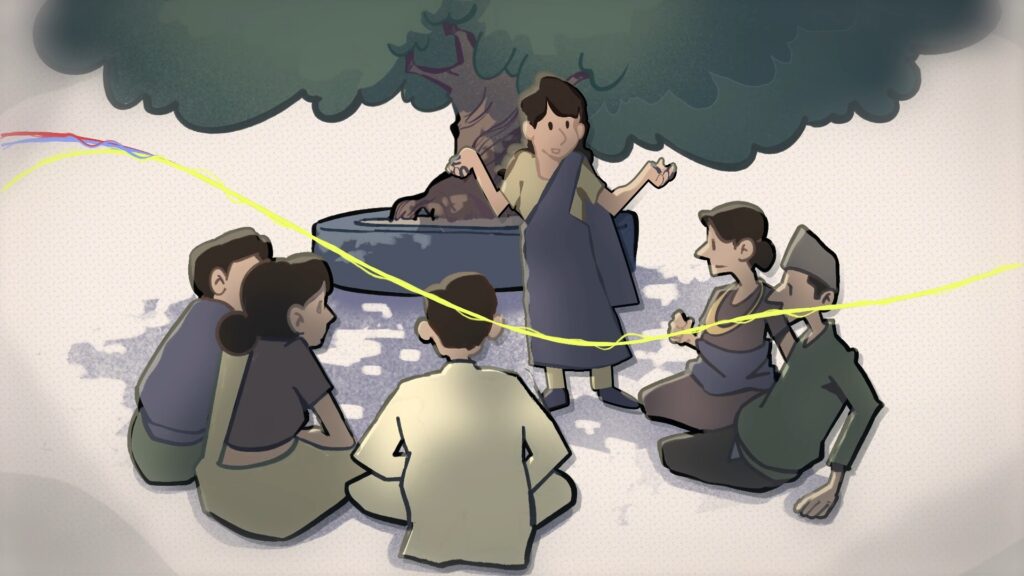
Yet, what cut through all of these choices, was the importance of intersectional solidarities, of spaces for reflection, and perhaps most uniquely, the practices and processes of care and repair that are crucial to healing from and resisting backlash.
Pathways to solidarity
In the final session of the workshop – ‘Pathways to Solidarity’ – we were joined by another group of super women – SuPWR advisory members and prominent global feminists. They reflected on the regenerative potential of backlash, and the criticality of care in building solidarity.
As we listened to comments of appreciation and congratulations for all that the project had achieved, and received encouragement to take SuPWR learnings from South Asia to wider literature, I felt so much joy and awe at how much we’d accomplished in these last six years, but also relief at being lauded by others that this had been something worth doing. Yet, there was also this immense sense of sadness. SuPWR had dominated my work-life and almost all of my brain space for the past six years. My SuPWR life had in it, super women, super activists, super workshops, super allies. In short, I had a super time.
As Debbie West (a super project manager without whom I would have long lost the movie plot) and Sharon Ward (a super finance accountant who kept our production on budget) close the books, SuPWR has had an ending as happy as Inside Out! Yet I can’t help thinking… what’s next? Of course, the impact of SuPWR is just beginning – as is a SuPWR book. This is the politics of hope that SuPWR has been about, so it’s only fitting that we as SUPWR researchers and activists, are living it!